
On Painted Flowers
Why floral paintings keep catching my eye.
I tend to recommend paintings with flowers in them more than I realize. It’s not intentional, but it’s consistent so I’ve been thinking about why.
Flowers are delicate, beautiful, and temporary. They might grow in your yard or arrive from far away places. The path of an off-season flower is fascinating, how it is preserved, who handles it, what it costs. A body of Luis Mora’s work focuses on the flower markets in Colombia, the vibrancy at their source, and then their long journey to our corner stores. Even after that journey, they maintain their shape, simultaneously delicate and resilient.
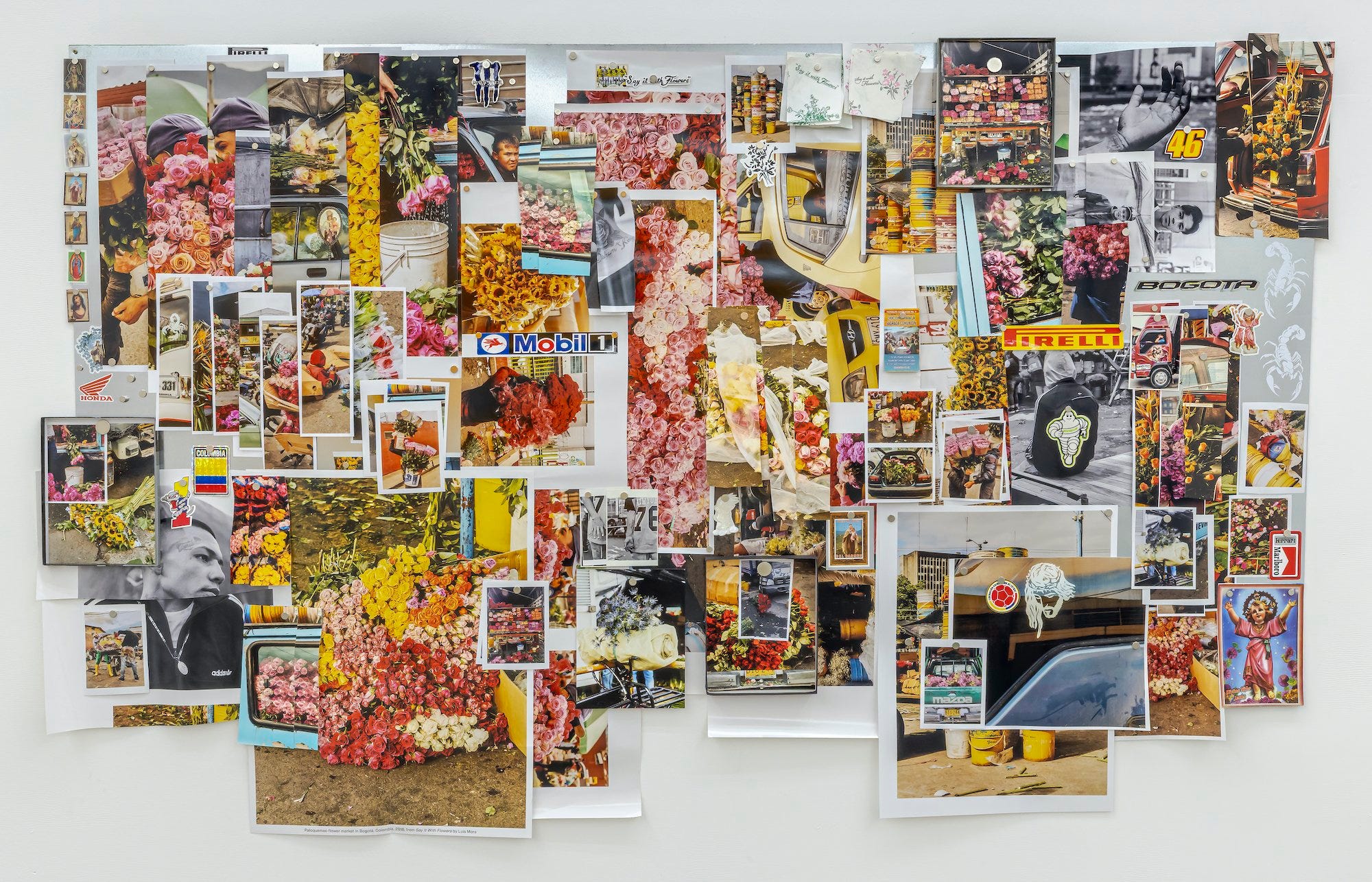
I’m drawn to flowers because they’re so tied to a specific moment in time, and that’s what attracts me to contemporary art in the first place, the moment a work is created feels immediate, but time reveals its true meaning.
To look at the history of art for a moment…
In early, medieval period, flowers were depicted as decorative ornament, on buildings or tombstones. With time they became symbolic, playing specific roles in religious iconography and storytelling. My favorite period of florals in art is the Dutch Golden Age, when the subject became the focus, not just a background detail.
Dutch masters painted bouquets that could never exist together in real life. Flowers of different seasons, or exotic imports paired with local varieties. It’s hard to imagine ourselves in a time before global shipping and refrigerated transport, before you could access anything at any moment. With that context in mind, 17th century viewers were asked viewers to accept something impossible.
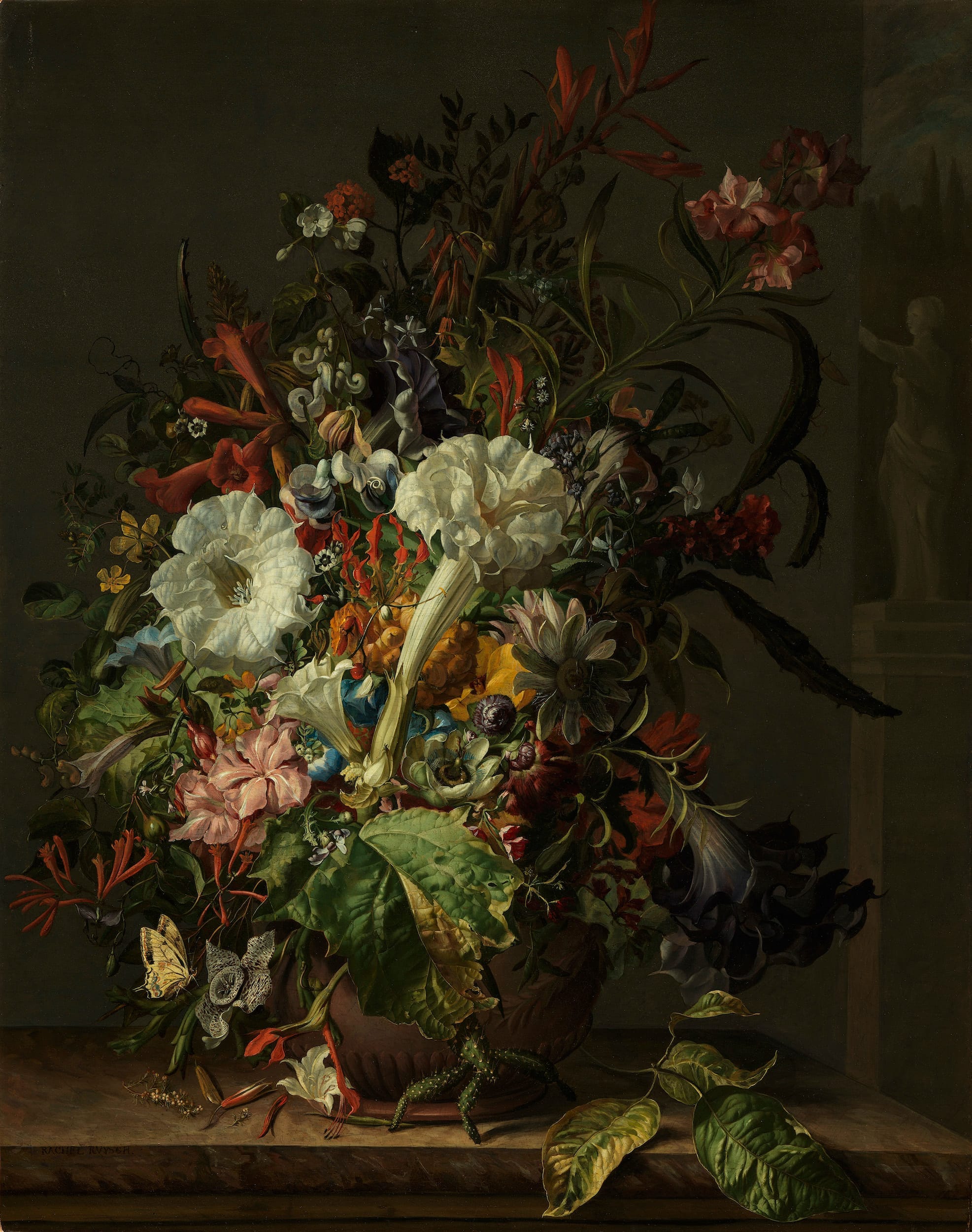
To that end, the bouquets weren’t just pretty, they told stories; tulips referenced speculative markets and trade, exotic flowers signalled wealth, insects and wilting petals hinted at decay. The message these florals brought is clear… beauty, luxury, and life itself are fleeting.
A seemingly simple arrangement in paint carries centuries of art-historical symbolism. That tension, between beauty and mortality, is what continues to pull me in to paintings about flowers.
The works you’re repeatedly pulled toward often reveal a pattern, though that pattern usually only becomes clear in hindsight. For me, flowers freeze a moment, and with that I imagine the artists in their studios, capturing the light shifting across petals that might not be there tomorrow. Frankly, I don’t love thinking about time passing, and as sentimental as this may sound, flowers feel like a subconscious reminder of how precious and temporary everything is.
🌸
Below you’ll find a few floral works that have caught my eye recently. As always, pricing for these works can be found below the paywall for paid subscribers!
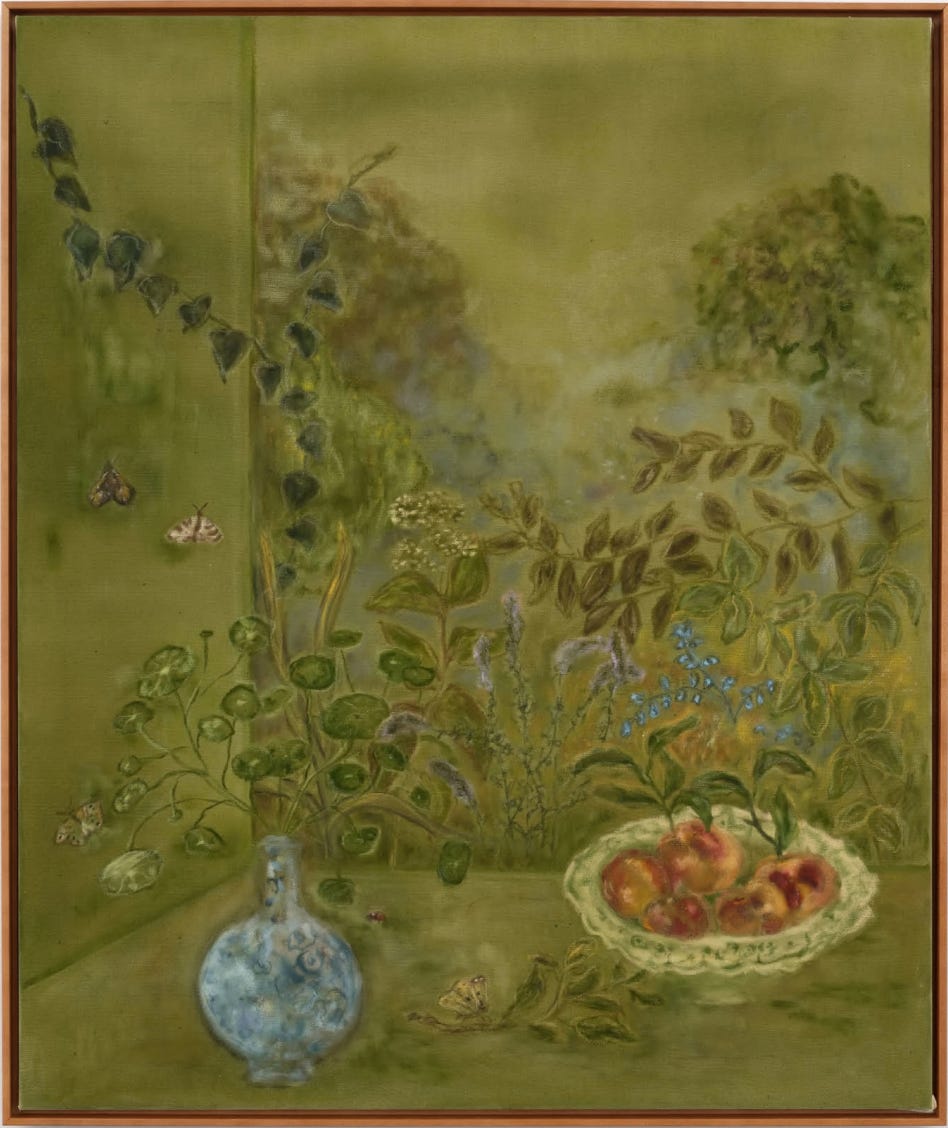
Kate Zimmerman Turpin
Moth and Rust II, 2026
Acrylic and pastel on canvas | 36 x 30 in
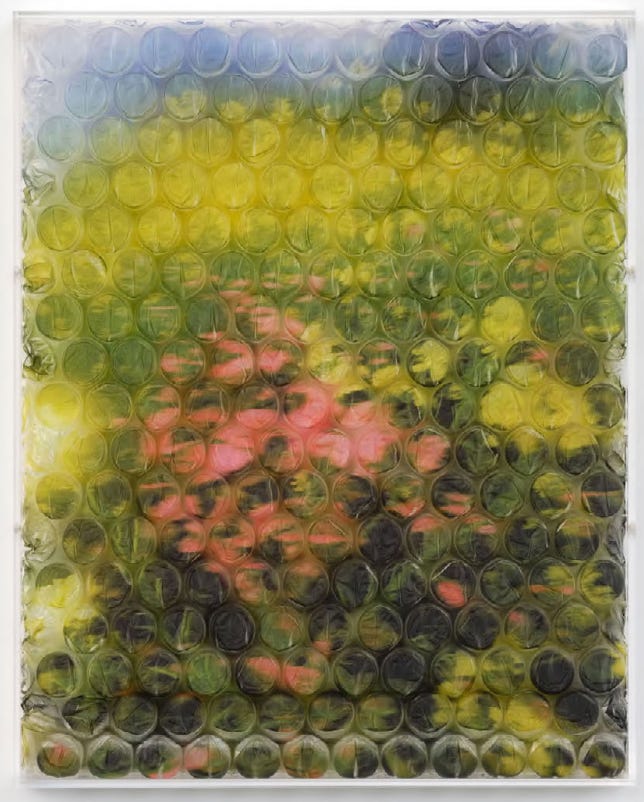
Rosie Clements
Calyx, 2026
UV printed photograph on bubble wrap, framed in clear plexiglass lid with canvas backing | 20 x 16 x 2 inches
$3,500 USD
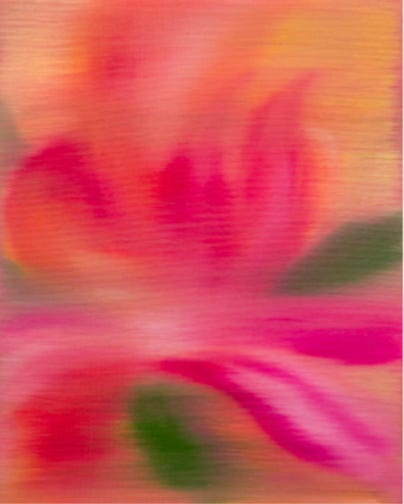
Alexandre Kasproviez
Étude VII (Fleurs, Jardin de l’Etat, La Réunion)
Oil on canvas | 9.5 x 12 inches
$2,000 USD
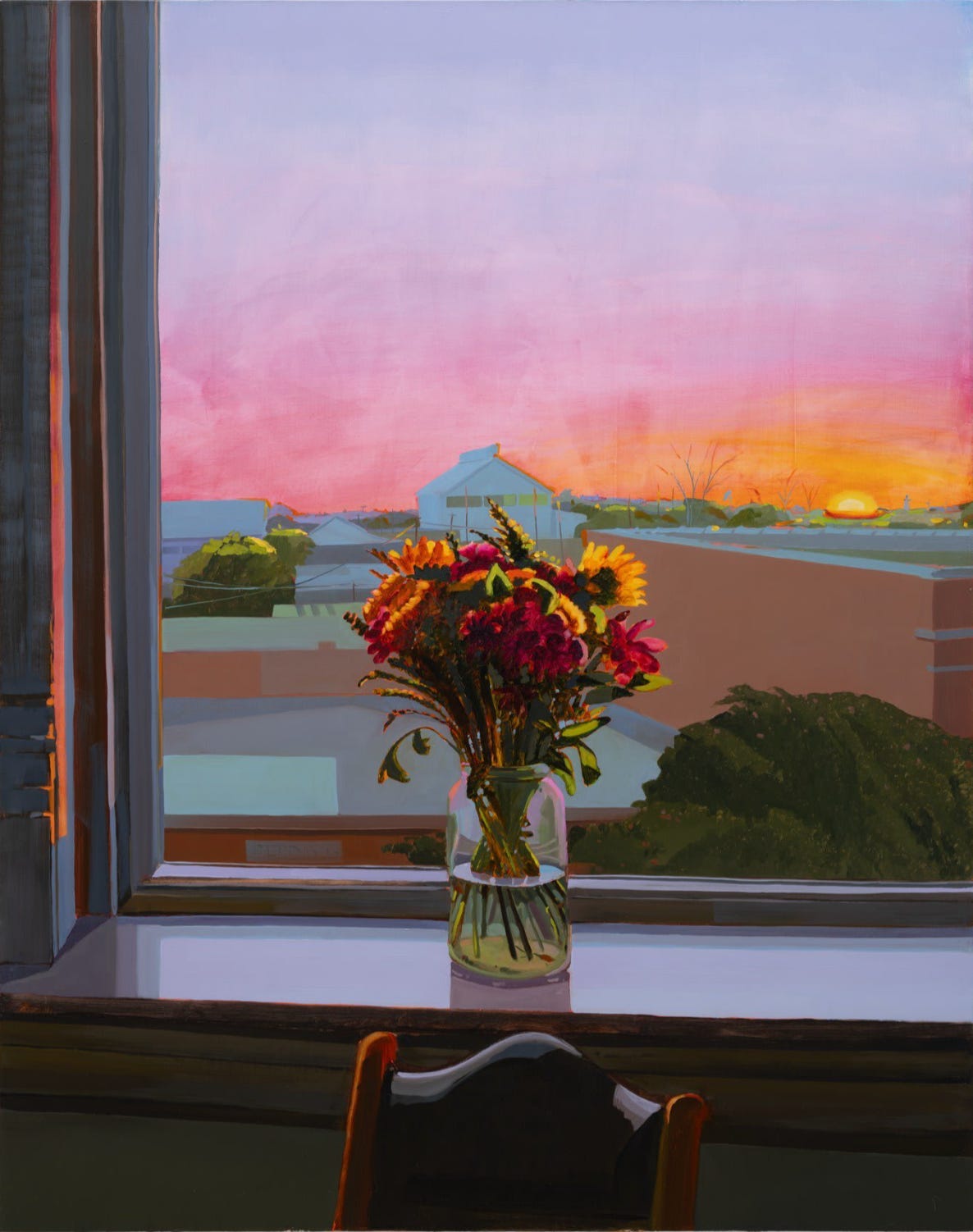
Keiran Brennan Hinton
Texas Sky (Sunrise), 2024
Oil on linen | 56 x 44 inches
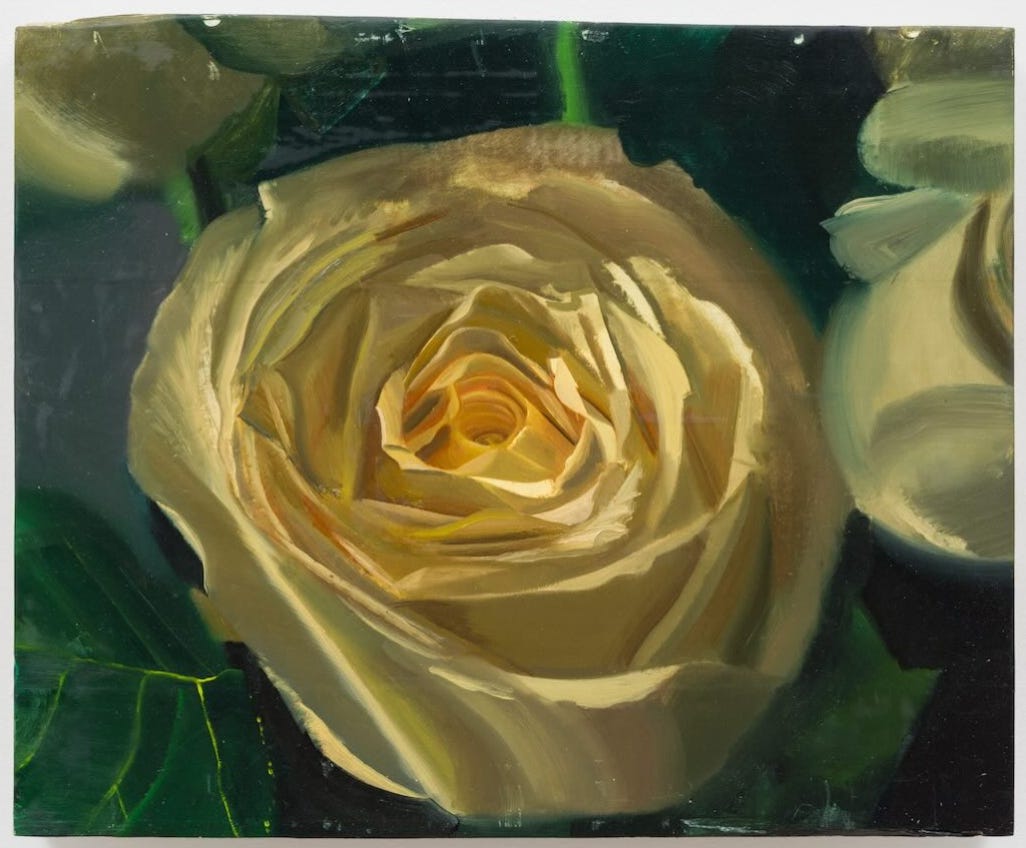
Phoebe Helander
Cold Rose in a Warm Room, 2024
Oil on wood | 12 x 12 x 2 inches
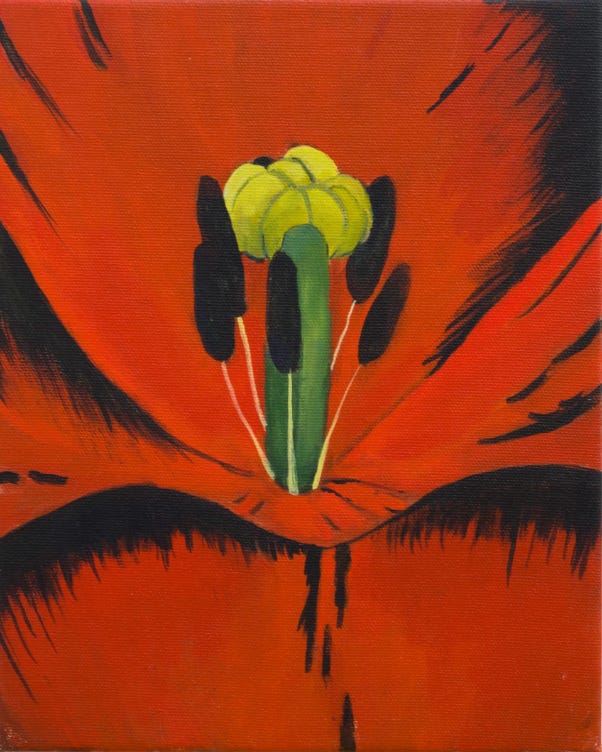
Claire Milbrath
Green Fuse, 2024
Acrylic on canvas | 10 x 8 inches
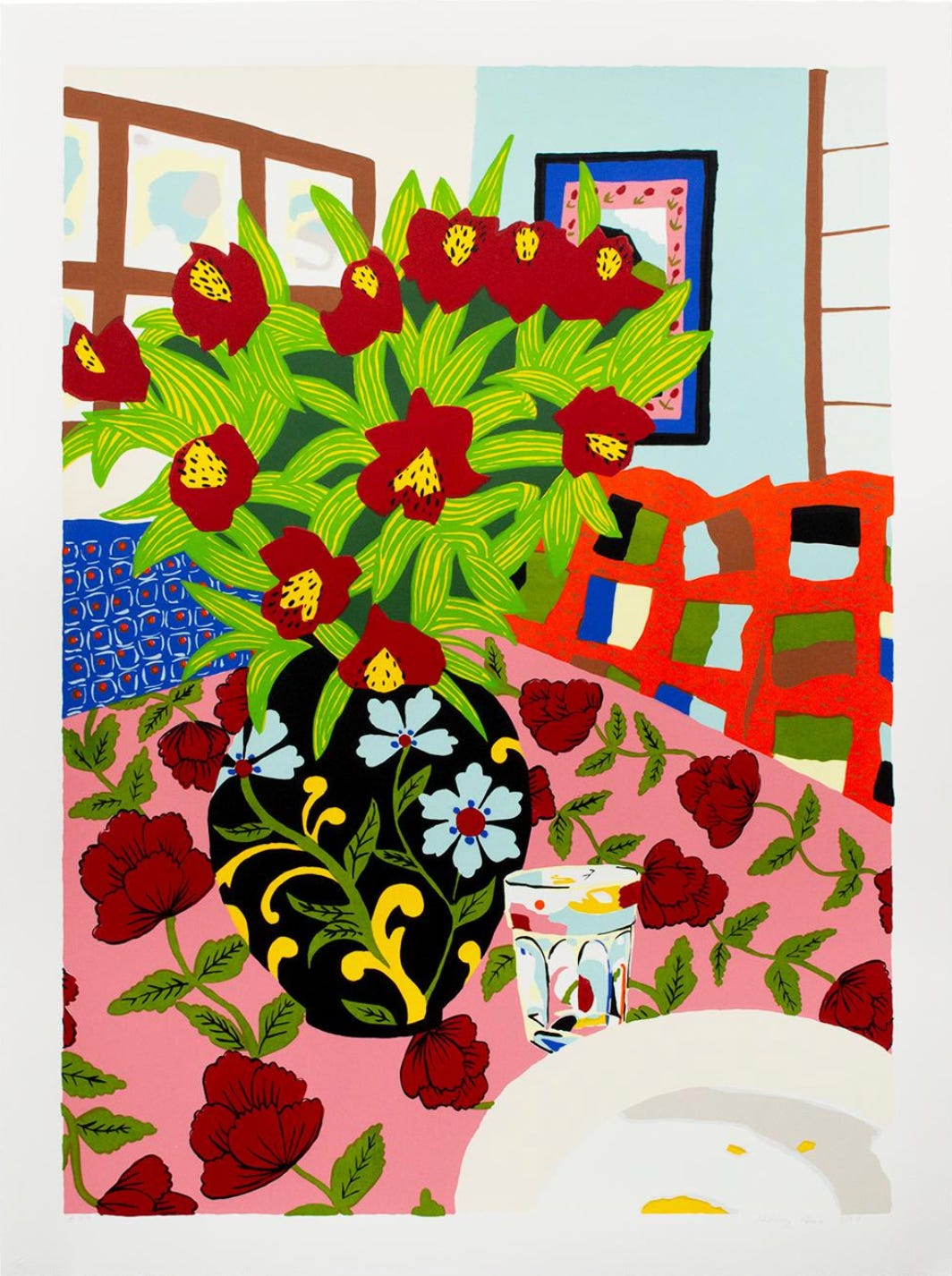
Hilary Pecis
Kitchen Lilies, 2024
Silkscreen, Edition of 50 | 40 x 30 inch edition of 50
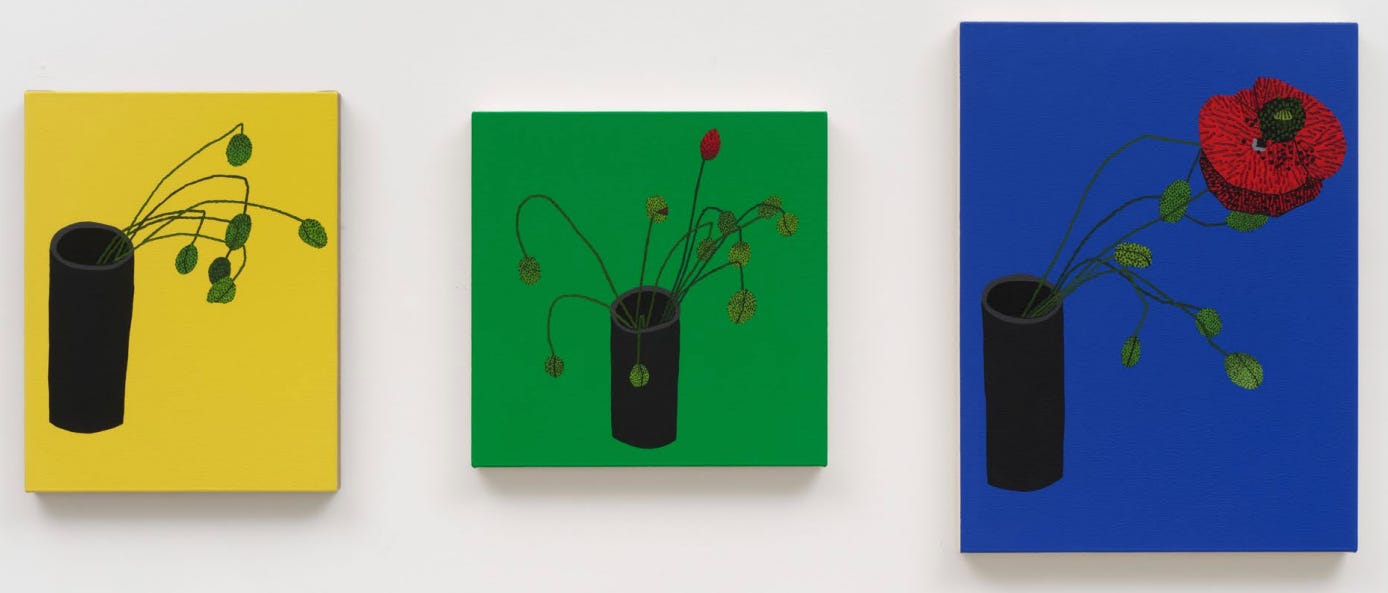
Jonas Wood
Poppies 5, Poppies 6, Poppies 7, 2024
Oil and acrylic on canvas and linen in 3 parts | 18 x 14 inches; 16 x 16 inches; 24 x 18 inches
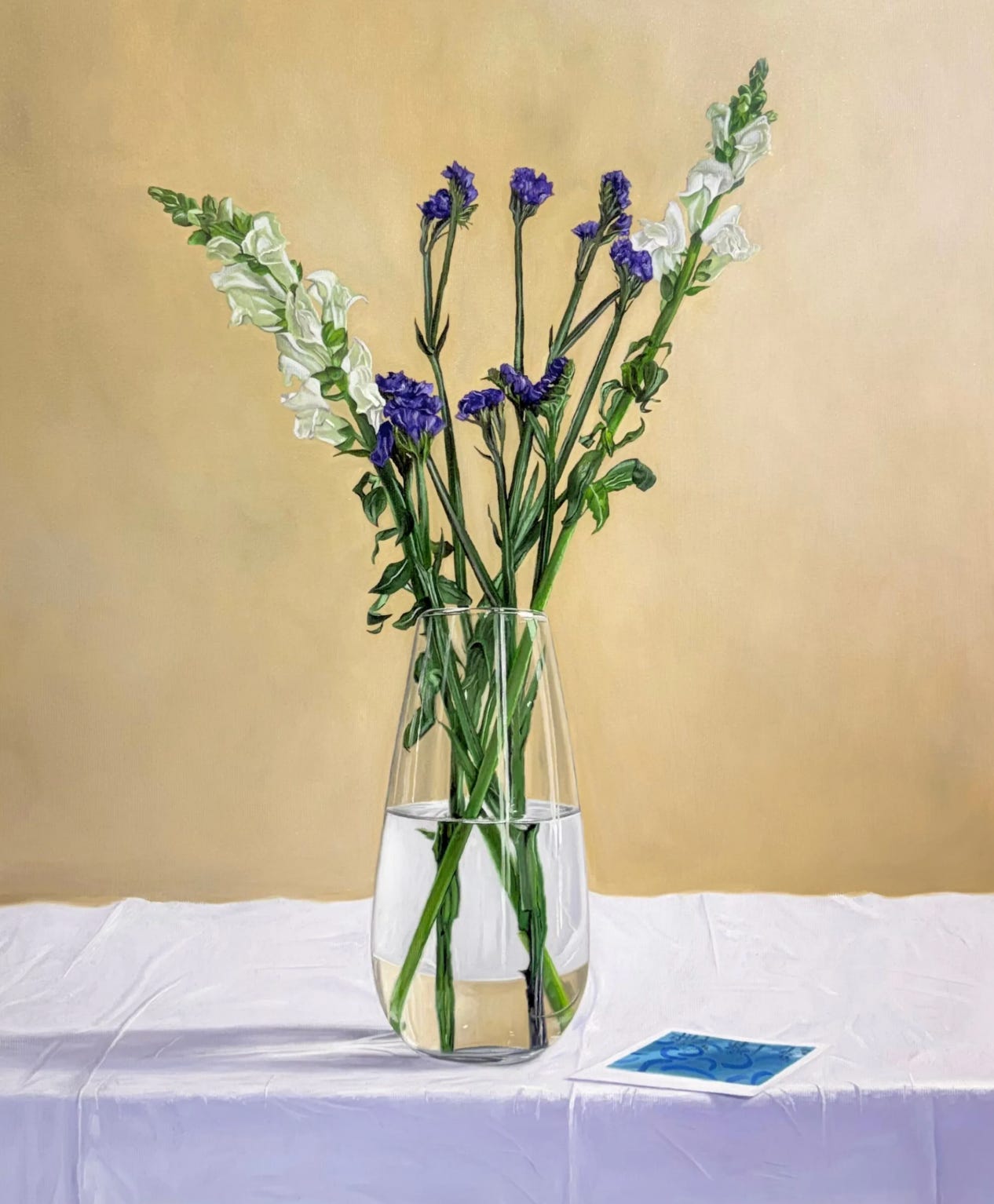
Julien Lischka
Le Bouquet , 2025
Oil on canvas | 23 3/5 × 19 7/10 in
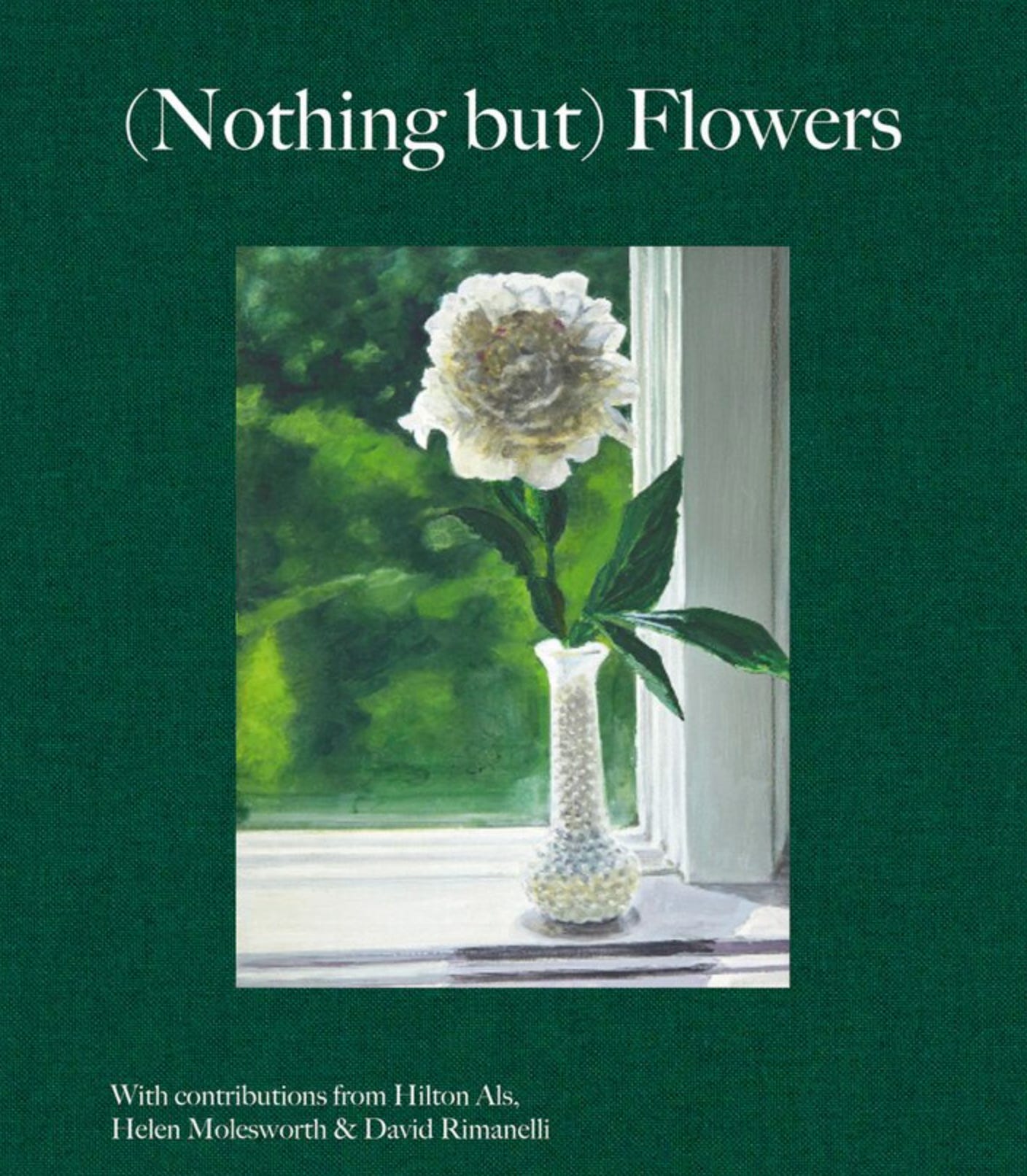
And finally… And while my appreciation for flowers is hardly unique, Karma has published an especially thoughtful curation of floral paintings that I return to often for inspiration, if you too can’t get enough. (I have this Dike Blair cover but choose your own adventure!)
PAID SUBSCRIBERS: Read on for more insight and details on the above flower paintings 🌸