
Hidden Stories Behind Paintings
What the back of a painting reveals about an artwork’s history, ownership, and journey through the world.
I’ve written many times about my love for auction finds, the thrill of the discovery, the unexpected, and the research rabbit hole, but one of my favourite parts of the hunt happens after the bidding is done — when the painting arrives, I turn it around.
The back of a painting is one of the most revealing places to look. The older the work, the more layered the story. Labels from galleries and exhibitions, handwritten notes, inventory numbers, old framing marks, stickers from previous owners or auction sales so many small traces build a compelling history.
Even art forgers understand the importance of this space. A convincing back can be just as important (if not more so) than the front.
At Independent New York Art Fair this past May, I saw a series of works by Michael Bühler-Rose at STEMS Gallery, that immediately caught my attention (which I shared in a previous newsletter). They were intricate wood intarsia works — meticulously constructed images of everyday objects and surfaces.

One of the pieces in particular, required a closer look. It was a 1:1 scale recreation of the back of a painting. Not the artwork itself, not the image that made it famous, but the back. I loved it!
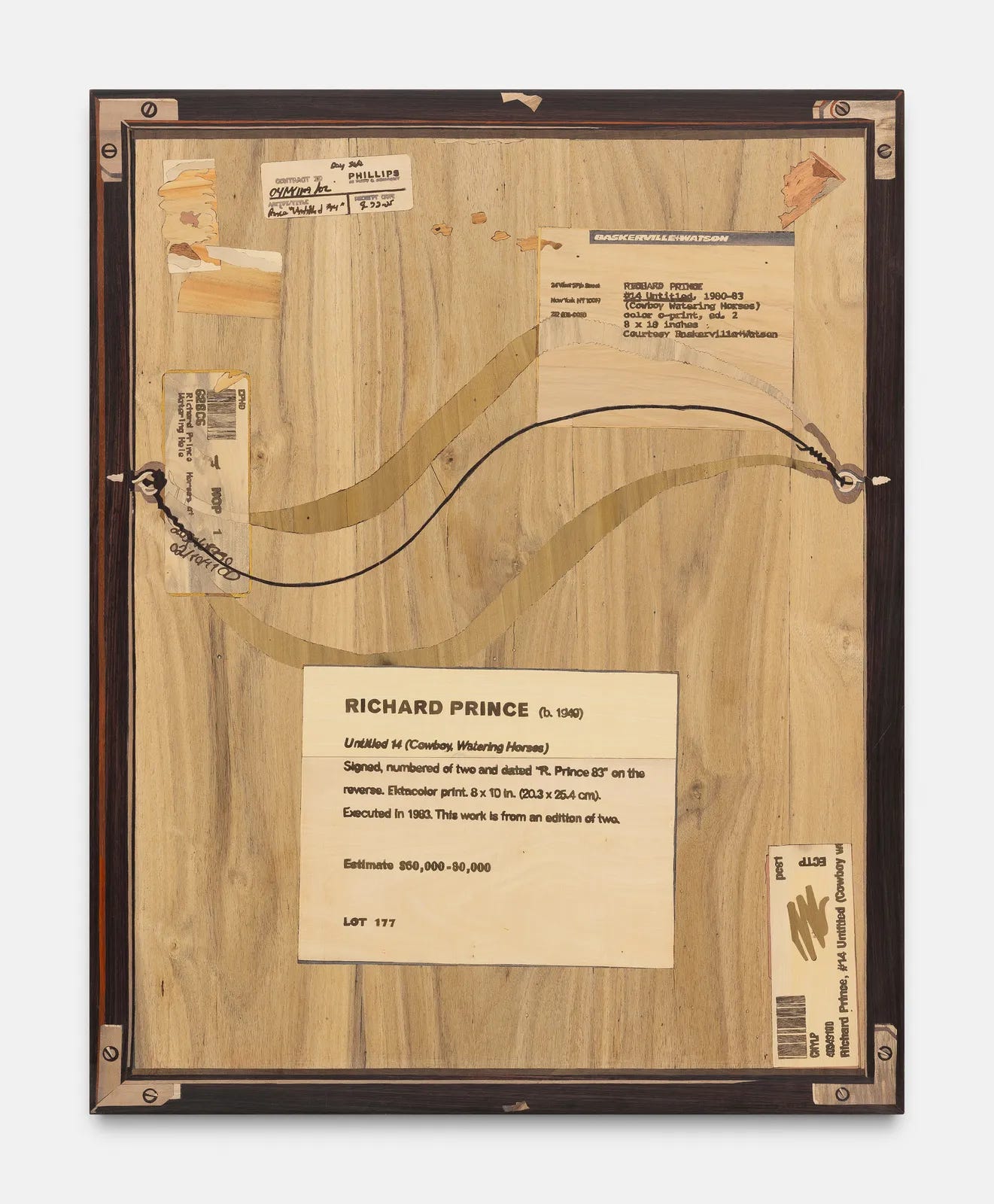
The work:
Michael Bühler-Rose
Verso (Richard Prince, #14 Untitled (Cowboy Watering Horses), 1983), 2025
Wood Intarsia/Inlay: Akshaya, Champa, Mukurche, Slate matti, Rosewood, Padauk, Aale and Kadyakshe woods
27 ½ x 21 ½ x 1 ½ in.
Bühler-Rose’s practice explores how collections reveal something about our inner lives, and how the objects we surround ourselves with become biographies of who we are. Here, he chose to recreate the evidence of an artwork’s life rather than the artwork itself by depciting the the labels, handwriting, inventory numbers, and sicker residue.
The front of this photograph is part of Prince’s iconic Cowboys series, the body of work that brought Prince major critical attention and became central to discussions around appropriation in contemporary art.
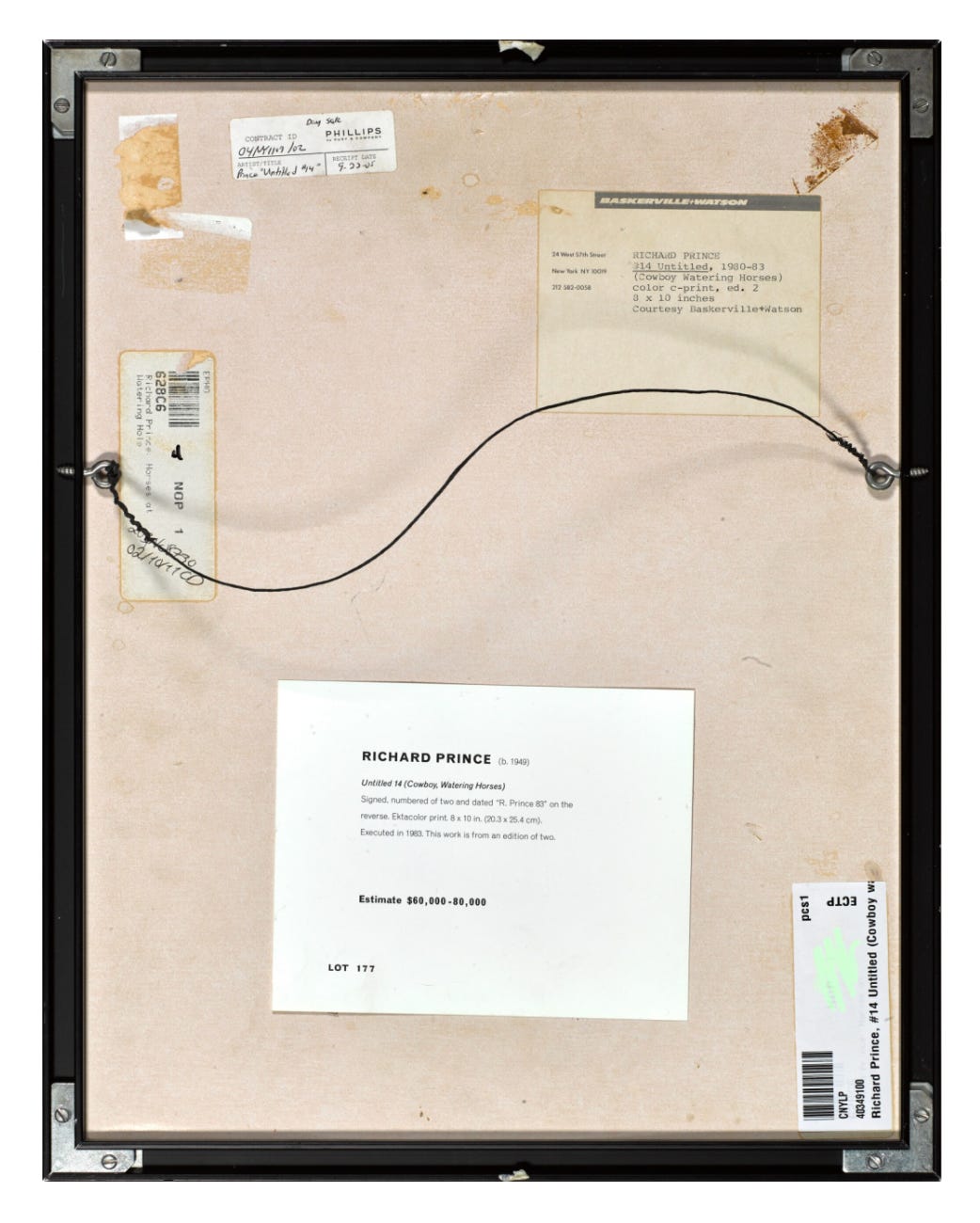
The documentary photograph of the back of the depicted work from Sotheby’s website:
Richard Prince
#14 Untitled (Cowboy Watering Horses), 1983
chromogenic print
signed, dated, and editioned ‘1/2’ in ink on the reverse, framed, a Baskerville+Watson, New York, label on the reverse, 1983
And the front of the work:
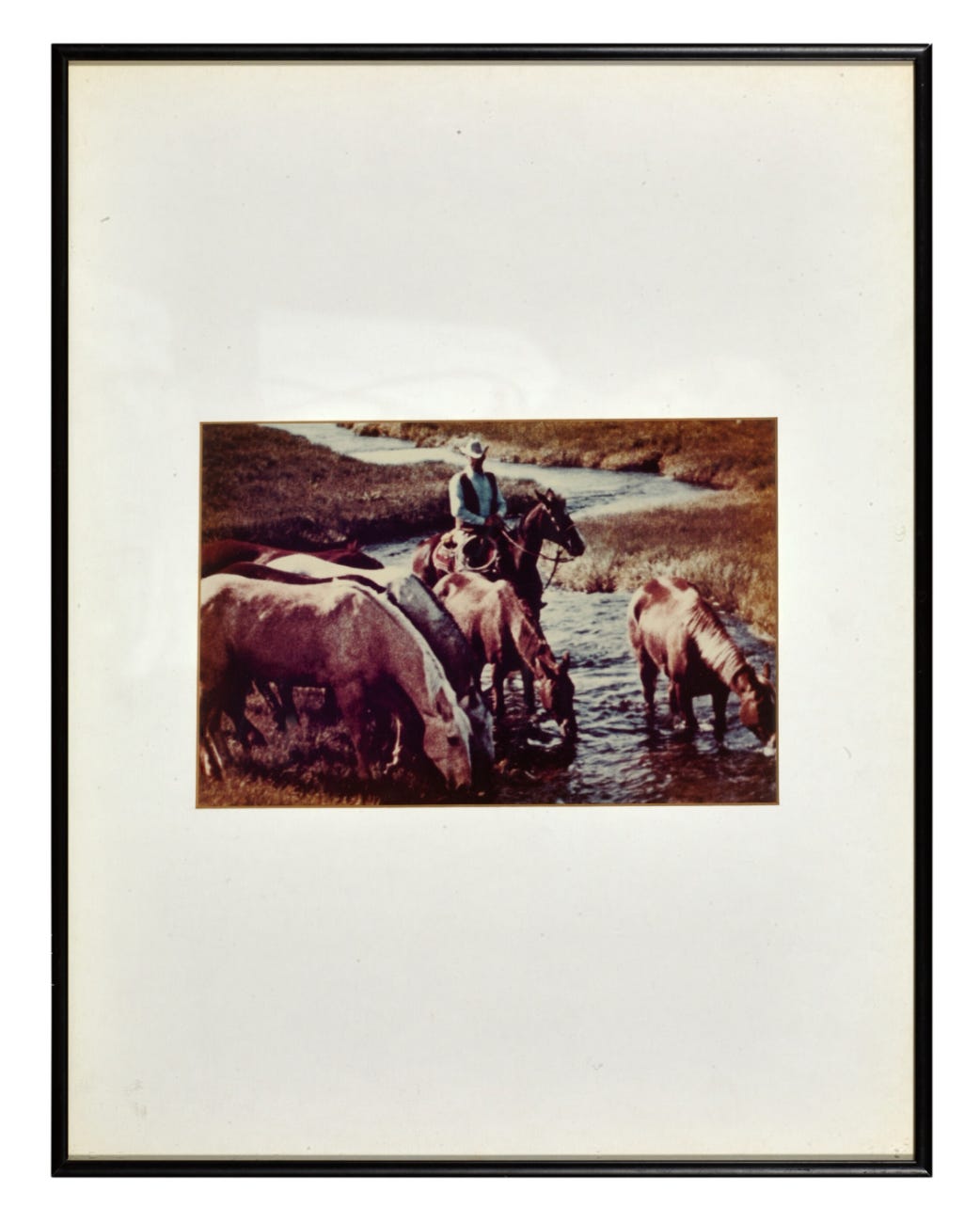
First shown at the pioneering New York gallery, Baskerville + Watson, in 1984, the series featured Prince re-photographing and cropping existing images of the iconic “Marlboro Man,” questioning ideas around authorship, originality, and advertising imagery.
Each movement of a work becomes part of its story, carefully documented in the auction catalogue’s provenance section, which records where a work has been, who has owned it, and how it has moved through the world.
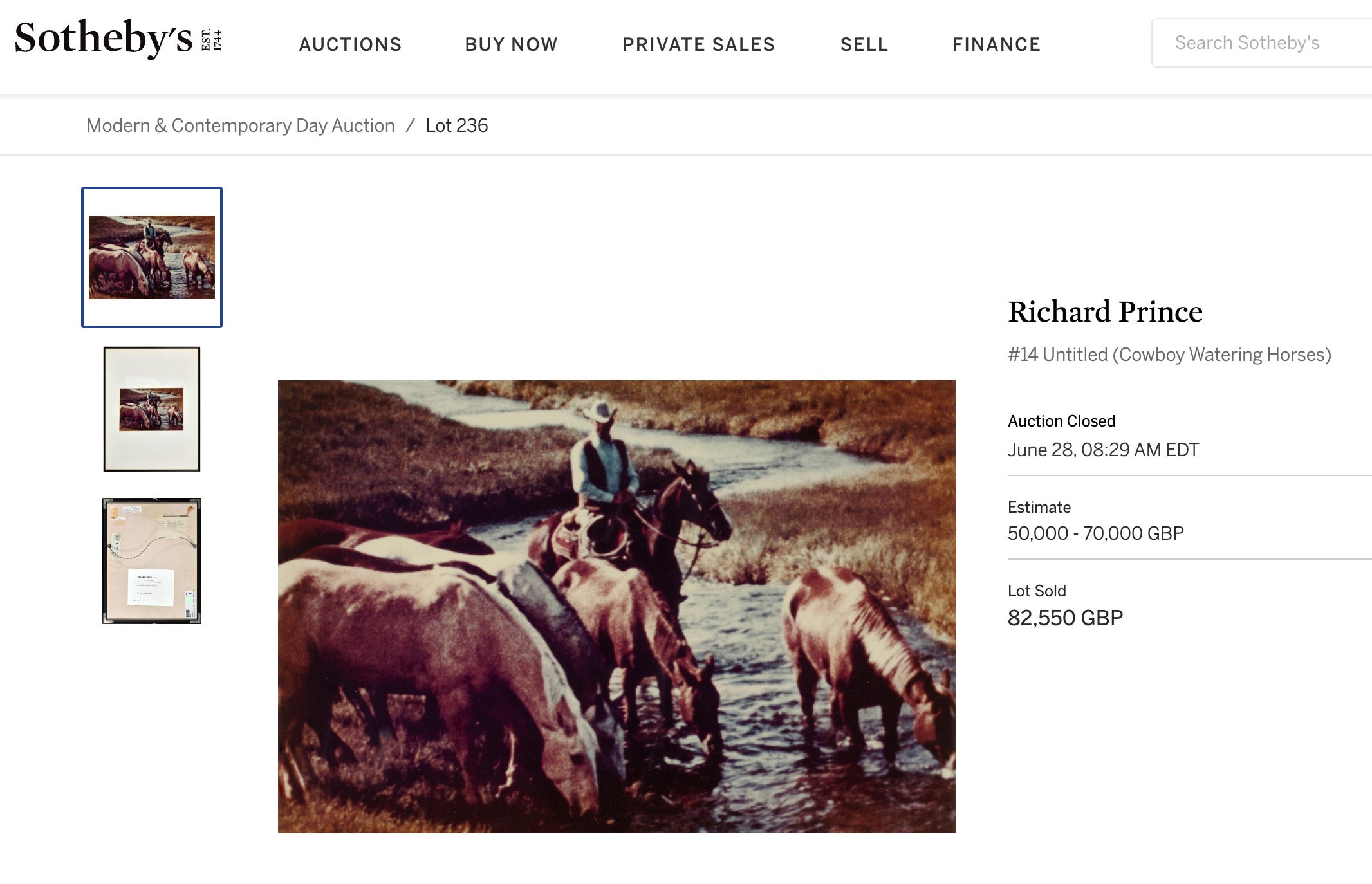
Provenance (as per Sotheby’s London Modern & Contemporary Day Auction, 28 June 2023):
Baskerville + Watson, New York
Private Collection
Phillips, New York, 11 November 2005, Lot 177
Private Collection, Europe
Sotheby’s, New York, 6 April 2011, Lot 167
Acquired from the above by the present owner
But the real history of a photograph can also appear in the evidence on its reverse:
A Baskerville + Watson, New York label
Artwork and edition details
A Phillips auction label
Inventory markings
Sticker residue
The front tells us what the artwork is. The back tells us what it has lived through.
In many ways, the back of a painting is its own kind of portrait.
We are often taught when looking at art, to focus on the image, but sometimes the most interesting stories sit just outside the image. This could be in the form of a verbal narrative of an artists’ story and practice, the contextualization of a series, or simply on the back of the work itself.
Because more often than not, an artwork isn’t only what you see. It’s where it has been, and the stories it has created, and in this case, the back of a painting tells you exactly that. So next time you have the opportunity to turn a painting over, DO IT, you won’t be disappointed.
Until next time…
xx, Bronwyn
Further reading…


